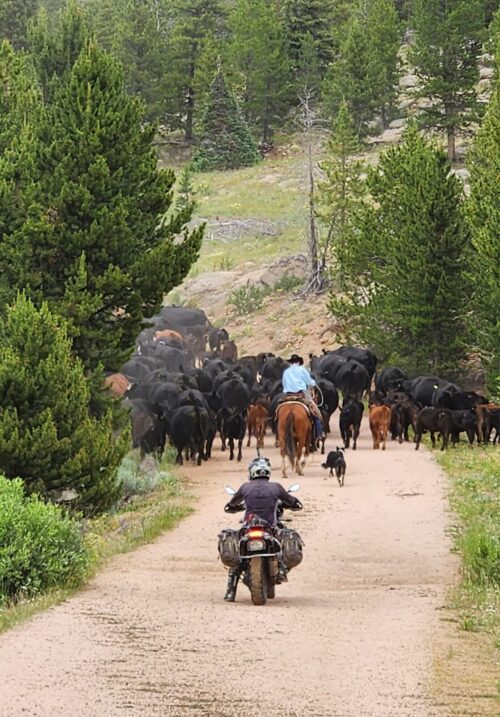
Colorado dual sport riding offers some of the most spectacular off-road experiences in North America. Here’s a quick look at what makes it stand out:
- Best routes: Colorado Backcountry Discovery Route (COBDR, 745 miles), Alpine Loop, Rimrocker Trail (160 miles), Hartman Rocks
- Best time to ride: July through September, when high passes (12,000+ ft) are clear of snow
- Ideal bikes: BMW R1300 GS/GSA of course! Or, the BMW F900 GS works too
- Skill levels: Beginner-friendly day trips near Denver and Boulder, up to extreme singletrack like the Colorado Ultra Enduro
Colorado is one of the few places on Earth where you can ride above the clouds, cross passes that top 12,000 feet, and still find a hot meal and a bed at the end of the day. The state’s sheer density of mountain terrain – including more 14,000-foot peaks per county than anywhere else in the continental U.S. – creates a riding landscape that simply can’t be matched.
But it’s not just the scenery. It’s the variety. You can spend a morning on a fast, hard-packed trail near Gunnison, cross a remote alpine pass by noon, and finish a 140-mile day in a historic mining town. Or you can keep it simple with a half-day Front Range loop from Denver or Boulder.
The challenge, especially for riders newer to dirt or high altitude, is knowing where to start – and how to stay safe when conditions change fast.
That’s where experience matters.
My name is Eric Sachs, owner of RAWHYDE Moto Adventures, and I’ve spent years riding and coaching on the kind of rugged, high-altitude terrain that defines Colorado dual sport adventures. Whether you’re building confidence on your first gravel pass or chasing technical singletrack across the Rockies, this guide will help you find the right route, ride, and preparation level for your next Colorado adventure.

Top Routes for Your Colorado Dual Sport Adventure
When we talk about Colorado dual-sport riding, we’re talking about the perfect balance between dirt, pavement, elevation, scenery, and capability. Unlike pure enduro riding, which is usually focused on tight, technical trails, dual-sport riding in the Rockies is about versatility. It’s about riding a machine that is street-legal, capable in the dirt, and comfortable enough to connect mountain passes, forest roads, small towns, and remote backcountry routes in a single day.
That often means lighter dual-sport bikes, but it certainly doesn’t exclude larger adventure bikes. A skilled rider on a BMW GS, Africa Twin, Tenere 700, KTM Adventure, or similar ADV bike can absolutely enjoy Colorado’s backcountry roads, alpine passes, and BDR-style terrain. The key is matching the route, pace, and difficulty to the bike and rider. Colorado rewards riders who can handle changing surfaces – pavement, gravel, embedded rock, loose climbs, water crossings, and high-elevation two-track.
The crown jewel of the state is undoubtedly the Colorado Backcountry Discovery Route. This 745-mile expedition stretches from the Four Corners, where Colorado, Arizona, New Mexico, and Utah meet, all the way to the Wyoming border. It is a true bucket-list journey that takes most riders 4 to 6 days to complete, averaging about 150 miles a day. For riders who want to experience the full scale of the Rockies – whether on a plated dual-sport or a properly prepared adventure bike – our Colorado Backcountry Discovery expedition is the gold standard.
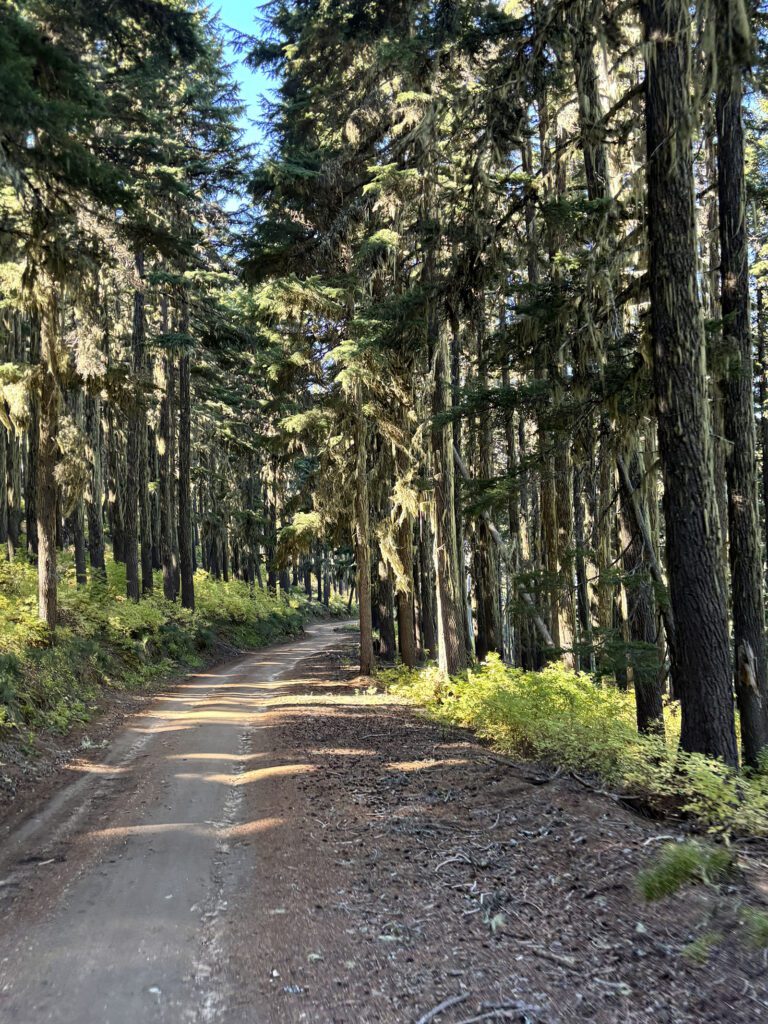
One of the most iconic sections of the COBDR is the Alpine Loop. Located in the San Juan Mountains, this area features high-altitude passes that will take your breath away – literally. You’ll navigate Engineer’s Pass and Ophir Pass, both of which offer views from over 12,000 feet. These routes are famous for their “shelf roads – narrow tracks cut into the side of the mountain where the views are as steep as the drop-offs.
If you’re looking to bridge the gap between the high peaks and the desert, the Rimrocker Trail – Colorado Motorcycle and ATV Trails is a spectacular 160-mile journey. Starting in Montrose and ending in the red rocks of Moab, Utah, this route takes you through the Uncompahgre National Forest. It’s a 3-to-5-day trip that transitions from lush aspen forests to rugged canyons.
The Colorado Dual Sport Singletrack Challenge
For those who find gravel roads too “tame,” Colorado offers some of the most grueling singletrack on the planet. The Colorado Ultra Enduro is a prime example. This isn’t your average Sunday ride; it’s a 452.6-mile beast with only 55 miles of pavement.
The stats are staggering:
- Total Elevation Gain: 76,533 feet (that’s like climbing Everest two and a half times).
- Bike Requirement: Strictly under 500cc (don’t even think about bringing a 1200GS here).
- Fuel Range: You must be able to go 94 miles between stops.
- Skill Level: Advanced. This route is designed for riders who are comfortable with tight, technical trails and high-endurance days.
Day Trips and Front Range Colorado Dual Sport Trails
You don’t always need a week-long hall pass to enjoy the dirt. If you’re based in Denver, Boulder, Colorado Springs, or Fort Collins, there are “through-routes” that allow you to leave the city, hit the trails, and pop out on a different paved road for a scenic ride home.
A favorite destination for a dedicated day of riding is the Hartman Rocks Recreation Area – Colorado Motorcycle and ATV Trails near Gunnison. With 90 miles of trails spread across 22 square miles, it’s a high-desert playground. The terrain here is mostly hard-pack, making it fast and fun, though it sits at a respectable 8,000 feet of elevation. Hartman Rocks offers everything from technical singletrack to wide-open 4×4 roads.
Essential Gear and Bike Prep for the Rockies
Riding in Colorado is hard on equipment. The “Rocky” Mountains earned their name, and the combination of sharp stones, steep grades, and thin air can sideline an unprepared rider.

We generally recommend mid-size dual-sport and adventure bikes that are manageable in technical terrain but still comfortable enough for longer days in the saddle. For many riders, that sweet spot is somewhere in the 300cc to 700cc range, especially on plated dual-sport bikes. That said, we do not exclude larger adventure bikes. Skilled riders on machines like a BMW GS/GSA, Africa Twin, Tenere 700, KTM Adventure, Ducati DesertX, or similar ADV bikes can absolutely enjoy these routes when the bike is properly prepared and the rider has the right skill set.
The main consideration is weight. Colorado’s passes can include loose rock, steep climbs, embedded ledges, tight switchbacks, water crossings, and long stretches at elevation. Experts may be able to muscle a liter-class adventure bike through that kind of terrain, but most riders will have a better and safer experience on a bike they can confidently manage when the trail gets rough.
Fuel injection is also a major advantage in Colorado. At higher elevations, especially around 10,000 feet and above, carbureted bikes can struggle unless they are jetted properly for altitude. Some riders use SmartCarb-style carburetors to help with those transitions, but for most people, EFI is the simplest and most reliable solution.
For those joining us on a High Rockies Adventure, we emphasize bike protection and fuel range. You should have a minimum 3-gallon tank. While some events have fuel stops every 80 miles, the COBDR has gaps as long as 121 miles (specifically between Gypsum and Steamboat Springs).
Tire Choice: In the loose shale and mud of the Rockies, you want a dedicated knobby. We often recommend a hybrid knobby for the rear to handle the rocky sections without shredding on the pavement connectors.
Lighting and Luggage: Since mountain weather can turn a day trip into an overnight ordeal, having high-quality lighting is a safety essential. Use soft luggage rather than hard panniers; if you drop the bike in a rock garden (and you likely will), soft bags won’t bend your subframe or break your leg. We are huge fans of anything Mosko Moto!
Navigating High Altitude and Remote Colorado Dual Sport Terrain
Navigating a Colorado dual sport route is about more than just following a line on a screen. At 12,000 feet, your engine loses roughly 3% of its power for every 1,000 feet of elevation gain. By the time you hit the summit of California Pass, your bike is significantly weaker, and so are you. Oxygen levels are lower, and fatigue sets in much faster.
Reliable navigation is non-negotiable. We recommend using a combination of “Ride with GPS” tracks, Butler Maps (the industry standard for paper backups), and a dedicated GPS unit. In the remote canyons of the San Juans, cell service is non-existent. We strongly recommend that all our riders to carry satellite trackers like SPOT or Garmin InReach devices for emergency communication – and always carry satellite trackers on your person! They make cool RAM mount options for the Garmin InReach – total trash. What happens when your bikes goes over the cliff but you don’t (or visa-versa)? Keep those emergency trackers on you at all times.
Legal Requirements and Rider Safety
Colorado is welcoming to riders, but they are strict about the rules that keep the trails open. To keep the peace and protect the environment, ensure your bike meets these standards:
| Requirement | Details |
| Colorado OHV Sticker | Required for all bikes on public lands (even plated ones). |
| Non-Resident Permit | Out-of-state stickers are NOT accepted; you must buy a CO permit. |
| Spark Arrestor | Mandatory on all US Forest Service and BLM land. |
| Noise Limit | Strictly enforced 96dB limit (for bikes 1998 and newer). |
Safety on these trails is a community effort. If you’re new to the dirt, starting with an Intro to Adventure Colorado course can save you a lot of pain.
One of the most important rules of the trail is Right-of-Way: Vehicles traveling uphill have the priority. It is much harder for a bike to restart on a steep, rocky incline than it is for a descending rider to stop. We also preach the “Buddy System” – never lose sight of your partner, and always wait at major trail intersections to ensure the person behind you made the turn.
Planning Your 2026 Colorado Dual Sport Calendar
The window for high-altitude riding is surprisingly short. While the lower elevations near Grand Junction or the Front Range might be rideable in the spring, the big passes often don’t clear of snow until July.
The 2026 season will peak from July through September. Chaffee County – home to the Collegiate Peaks and the Sawatch Range – is the heart of the action. Towns like Buena Vista and Salida serve as perfect base camps because they sit at the confluence of three National Forests.
If you’re looking to sharpen your skills before hitting the big loops, our Next Step Colorado training is timed perfectly for the summer season. For those who want the camaraderie of a group, keep an eye out for the X-Roads BV (6 days of riding in early August) or the classic Father’s Day Weekend Ride. These events offer multiple loops over the Continental Divide, letting you experience the headwaters of the Arkansas River in all their glory.
Frequently Asked Questions about Colorado Dual Sport Riding
What is the best time of year to ride in Colorado?
The “prime” window is July through September. While some lower trails open in late April, the high mountain passes (over 10,000 feet) are usually blocked by snowpack until mid-July. Be prepared for the afternoon “Monsoon” season in August, where brief but intense thunderstorms roll in almost daily around 2:00 PM.
Do I need a street-legal bike for the COBDR?
Yes. While much of the route is dirt, the COBDR and many other through-routes rely on paved connectors and highway crossings (like Highway 141). To legally complete these routes, your motorcycle must be plated. If you aren’t quite ready for the full expedition, our Intro Plus Colorado course is a great way to bridge the gap between training and touring.
What is the longest fuel gap on Colorado trails?
The longest gap on the official COBDR is approximately 121 miles between Gypsum and Steamboat Springs. However, on more remote singletrack routes, fuel stops can be 94 miles apart with no “easy” way out. We recommend a bike with at least a 3-gallon capacity or carrying auxiliary fuel bottles.
Conclusion
Colorado isn’t just a place to ride; it’s a place that tests your skills and rewards you with views that stay with you for a lifetime. From the 745-mile journey of the COBDR to the technical “E-ticket” rides of Chaffee County, the opportunities for Colorado dual sport adventure are endless.
At RAWHYDE Moto Adventures, we don’t just show you the trails; we give you the skills to master them. As the official BMW off-road academy, our USMCA-certified coaches provide immersive Training in Colorado at our high-altitude facility. After a long day of conquering passes, you can relax at our base camp with chef-prepared meals and the company of fellow adventurers.
Ready to start your journey? Check out our full range of Colorado training and tours and let’s get you ready for the high peaks of 2026. We’ll see you at the summit!
